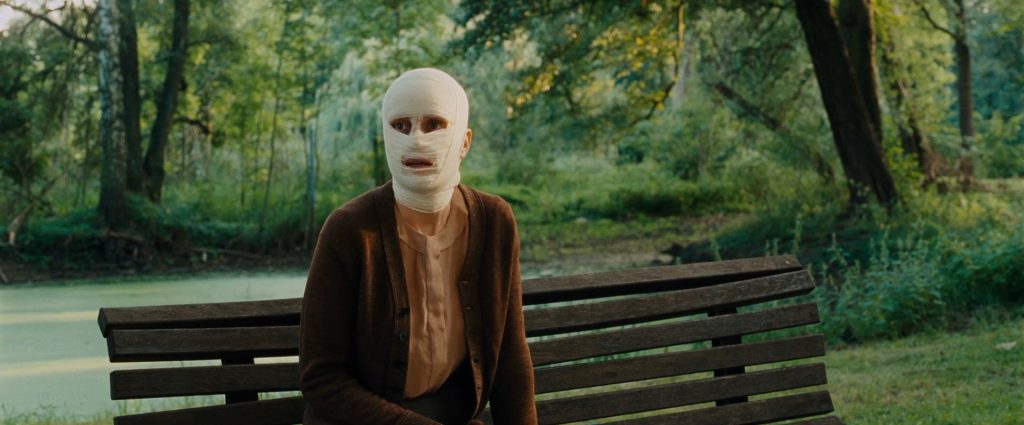
Phoenix
2014, directed by Christian Petzold
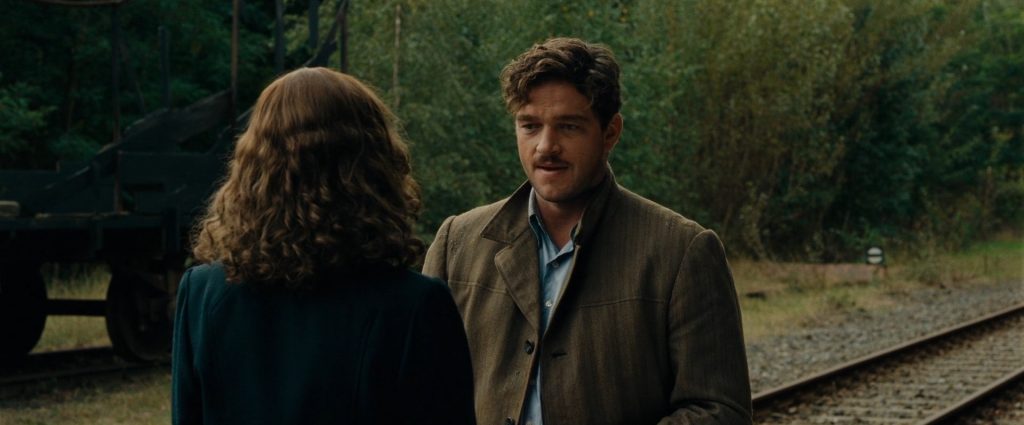
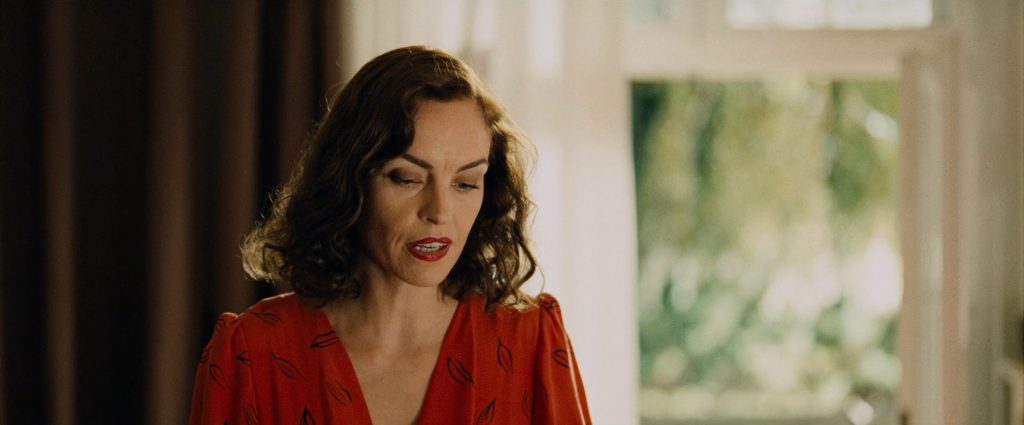
Fifty-six minutes into Phoenix, after trying on a dress she had worn before her arrest and disfigurement, Nelly Lenz objects to the particulars of Johnny’s plan to stage her dramatic return in front of their close friends: “And I’ll be in a red dress and shoes from Paris? You think anyone leaves the camps like that? Nobody will buy it.” Johnny insists that their friends don’t want to be confronted with the unpleasantness of the Shoah. “They want Nelly, not a ragged camp internee,” otherwise they won’t be useful witnesses to her purported return. “It’s the only way to get what we want,” he tells Nelly. This difference of thinking lies at the center of Phoenix, and it lays the foundation for an extraordinary finale.
It’s not off-topic to point out that the conversation above could just as well take place between a screenwriter and a movie director. One of them tries to think the situation through and portray it accurately; the other cares only how the audience will react. Johnny is the director here and gets his way for now, but Nelly is also the lead actress, and a performer can sometimes improve on a director’s vision. The fault line between these two characters corresponds to a real divide between two kinds of cinema: one which aims to portray life realistically, and one that caters to the fantasies of its audience.
People generally underestimate how much the history of cinema is a history of selling fantasies. Fantasy covers more than just vicarious romance, sex, action, or adventure. It also extends to the audience’s self-image. More than just experiencing thrills, people also want to picture themselves as heroic, glamorous, seductive, witty, clever, or successful, among many other qualities, but the most underappreciated is the fantasy of virtue. Regardless of a viewer’s faults or guilty conscience, a powerful sense of righteousness can be had for the price of a movie ticket. This same fantasy is operative in Phoenix, where Johnny’s audience includes Nazi collaborators and untrustworthy neighbors. As long as they can see Nelly as they used to see her and welcome her back cordially, they can easily reassure themselves that they’re good people. The fantasy would be ruined if they had to face the horrors of the death camps.
On the face of things, Nelly’s preferred approach sounds optimal. Though she secretly benefits from personal experience, her complaint about the fashionable shoes and red dress is equivalent to a writer catching a continuity error. It takes skill and imagination to think a situation all the way through, and in our metaphor Nelly represents an honest approach to cinema in contrast to Johnny’s exploitative approach. It’s usually the job of a writer to conceive a circumstance so thoroughly that the characters say and do what they might in real life. While applying anaesthetic, Nelly’s surgeon had cited a film that envisioned an imaginary situation with admirable fullness. Asking Nelly to count back from ten, he described the famous countdown from Fritz Lang’s Woman in the Moon (1929) which accurately predicted the countdowns used decades later in actual space travel.
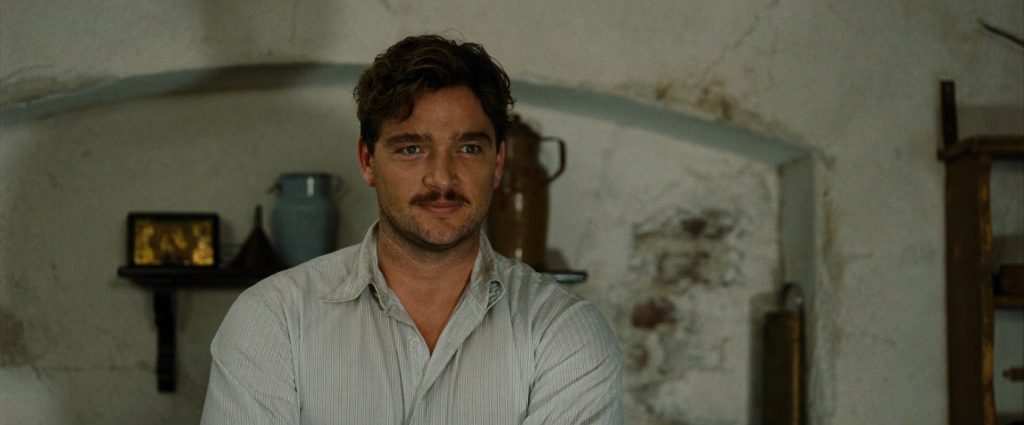
Dr. Bongartz’s example, however, raises a red flag. Woman in the Moon was written by Lang’s then-wife Thea von Harbou, who would later become a member of the Nazi Party. It’s one thing to respect her prescience in an apolitical context, but to hold her up in comparison to the example of a Holocaust survivor, even a fictional one like Nelly Lenz, is something else. We ought therefore to question whether the implied division between honest and manipulative cinema is really the lesson we want to take from Phoenix. For one thing, it’s too simplistic. For another, we have to admit that whatever his motives, Johnny shows a perceptive understanding of his audience. By insisting on the red dress and the shoes from Paris, he’s apparently judged his friends correctly, and he’s even able to predict how each will greet Nelly in the correct order. He’s thought things through as well.
Nelly realizes she must go along with Johnny and wear the fancy dress and shoes, but she’ll also throw a wrench into Johnny’s plan. In so doing she’ll model a third way – a superior alternative to the literal realism she initially wanted and to the emotionally effective illusion that Johnny favored. The challenge of Phoenix is to define this third way, but first we must put it in context.
For the film’s first hour and twenty minutes, Nelly would have been willing to submit to Johnny’s scheme. She loves him intensely. “I wouldn’t have survived the camp except for Johnny. All I thought about was how I’d come back to him.” When Lene tells her he’ll go after her money, she reacts with a look of cognitive dissonance… the truth about Johnny simply won’t enter her mind. At the end of their rehearsal on the railroad tracks, Johnny guides her through their initial embrace: “We’ll simply hug. You’ll lay your head on my shoulder, and we’ll both close our eyes. Nothing else. Nothing. For ages.” Nelly won’t hold her eyes shut for ages, though. A few seconds later, she’ll walk into her home and figuratively open her eyes. Lene has killed herself, and Nelly finds out that Johnny divorced her two days before her arrest.
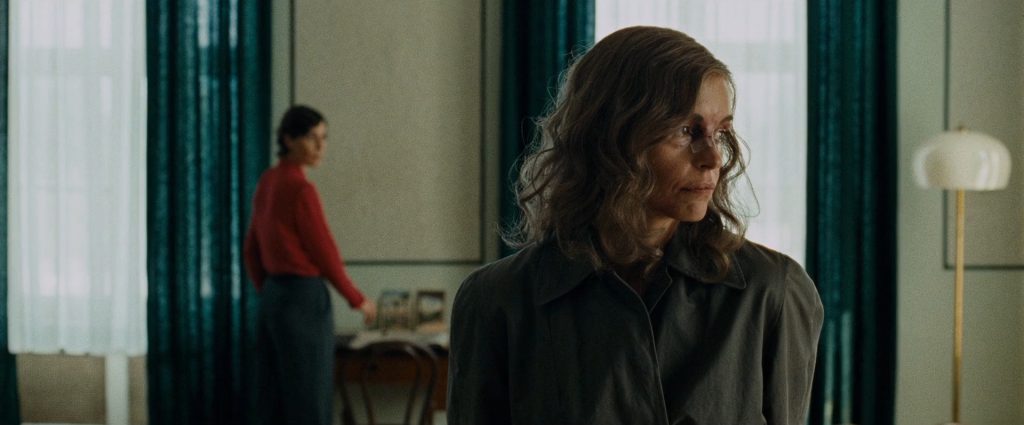
Precisely an hour of screen time before this dual shock, Nelly had made a promise to Lene. Hearing a phonograph of Kurt Weill’s “Speak Low” at dinner, Lene asked, “Would you sing it for me?” Nelly assented with a warm smile, but we never hear her sing it in Lene’s presence. The implication is that she sings it for Lene at the end. Lene had strongly objected to Nelly’s renewed acquaintance with Johnny. “When you were sitting there in the dark, I thought you’d shot him and needed my help. And honestly, I’d have preferred that.” Nelly won’t shoot her ex-husband, but in keeping her promise to sing “Speak Low” she doubtless does exactly what Lene would have wanted.
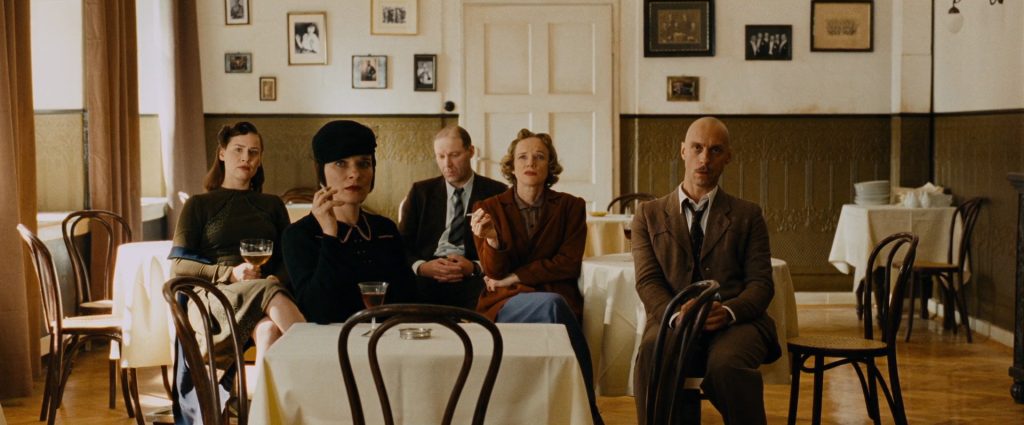
In a 2016 video conversation with Nina Hoss, Christian Petzold describes why the film ends out of focus: “[Nelly] walks out and leaves us all behind. She leaves with such dignity, and any attempt to follow her, to share in that dignity, would have been tasteless.” With her inheritance and her freedom, Nelly has many options, but there’s a flip side. If we consider the situation in its entirety, we can begin to appreciate how absolutely limited Johnny’s options are here. As the director says, it’s not our prerogative to follow Nelly, but we’re virtually invited to follow Johnny and to see just how screwed he is. He could not very well refuse Nelly’s request to play “Speak Low” in front of their five friends and neighbors, yet he must have wondered what this almost random woman he’s picked off the streets has up her sleeve. His wife was a professional singer… will this woman spoil the illusion? As she transitions from spoken verse to actual singing it dawns on him that it’s really Nelly, then he notices the numerical tattoo from Auschwitz on her arm. He stops playing, overcome with shock, and she walks out, leaving their friends staring at him.
At this point there’s nothing Johnny can say, yet silence is hardly better. To tell the whole truth would needlessly let his friends know he tried to deceive them, yet any lie, or saying he doesn’t know why Nelly left, would beg all sorts of questions. Why doesn’t he follow her? When will she come back? Johnny’s situation is also precarious, because he’s committed a crime by turning his wife in. His friends may not be much better, but people who would have informed on their neighbors to the Gestapo might also inform the Allied forces now occupying Berlin. Phoenix opens at an American checkpoint, a rather unnecessary scene unless it’s meant to remind us, while putting the ending together, that a strict anti-Nazi authority is in control.
None of the logic of Johnny’s situation is spelled out. We’re left to read his mind as he plays the piano, and then to reconstruct his dilemma as the credits roll. Although we know more than the five persons in Johnny’s audience (who are pictured in the otherwise empty restaurant almost as if they’re in a theater or cinema), they’re in a similar position. Nelly has left them to figure out the truth among themselves, and in so doing she’s defined her “third way” which we can apply to a broader understanding of cinema as well. The alternative to direct telling and to deceptive manipulation is to enlist the audience as active participants in a revelation. The desired understanding will be more difficult, and the audience may never reach it, but if they do then it will come all the more powerfully.
Insofar as Phoenix is a lesson in cinematic dramaturgy, it’s fitting that its plot is built on the scaffold of Vertigo‘s. The parallels only extend to the second half of Vertigo, as Johnny (who bears Scottie Ferguson’s second nickname) tries to refashion a woman as he previously knew her, believing until the finale that she’s someone else and that the first one is dead. The two films have different agendas, but they both reach for an ending where the viewer must reconstruct all that’s going on in a man’s head as he’s left hanging. Vertigo is an example par excellence of the “third way” that Nelly aims for.
To describe Phoenix as an analogy for cinematic storytelling should not reduce it, but rather should clarify what it contributes to discourse on the Holocaust. Like Hitchcock, whose films always insisted on the decisive role of ordinary people in shaping the outcome of society, Phoenix targets not the sinister architects of the Holocaust but the cowardice and treachery of ordinary people who turned against their families, friends, and neighbors, thus yielding power to the authors of the “Final Solution”. Anyone who fully appreciates the film’s ending can also appreciate how decisively an act of betrayal can come back to trap its perpetrator.
CONNECTIONS:
The Third Man – Reunion of two formerly close people, one of them corrupted, in a bombed-out European capital shortly after World War II
Vertigo – Man named Johnny who tries to remake a woman into her previous image, unaware that she’s the same woman; long kiss that’s false from the man’s point of view but which the woman feels deeply; film ends at a point of revelation for the man and departure for the woman
Seconds – Character given a new start in life after facial reconstruction surgery
In the Mood for Love – Plot built around a man and woman bound in a complicated relationship who meet repeatedly to rehearse a separate or past relationship; soundtrack of jazz songs
REFERENCE:
Video: “Christian Petzold and Nina Hoss on Phoenix” 2016, Berlin (available by subscription): https://www.criterionchannel.com/phoenix-1/videos/christian-petzold-and-nina-hoss-on-phoenix