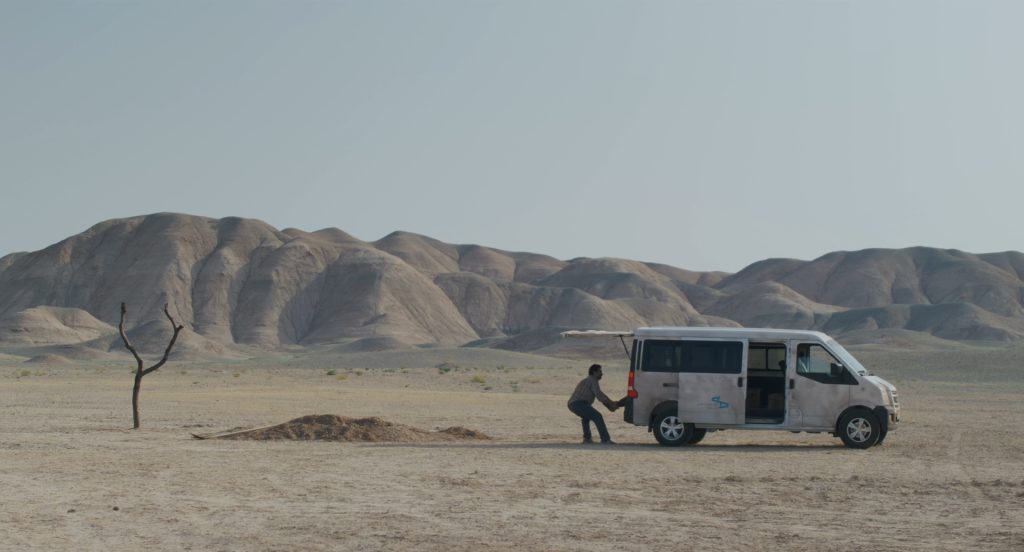
It Was Just an Accident
2025, directed by Jafar Panahi
Over the course of a day, a humble laborer named Vahid has a strange adventure after crossing paths with his former tormentor from an Iranian prison. Seeking to confirm his enemy’s identity before exacting revenge, he gathers around himself a series of fellow victims. First he meets Salar, a bookshop owner. Salar leads him to Shiva, a wedding photographer. Shiva brings in Hamid, a wild man whose outbursts require the whole group to restrain him. The order of this sequence is important, considering that the first one caters to the intellect, the second deals in affairs of the heart, and the third is a man of overbearing physical courage.
The title of It Was Just an Accident emphasizes the fact that all the trouble began with a dog, so that the film is a loose retelling of The Wizard of Oz. The parallels don’t go too much deeper than those mentioned above, but there are a few additional signs. Eghbal’s little daughter, who grieves for the dog in the accident, also plays with a dog puppet, listens to a song called “Ow Ow Ow Ow”, and wears bright red shoes. The photoshoot location is overrun with crows, as if to acknowledge that the scarecrow’s counterpart (Salar) hasn’t accompanied Vahid. Once the group is established, they run out of gas on the streets of Tehran, somewhat like the travelers stuck in the poppy field, and the story ends at the protagonist’s home.
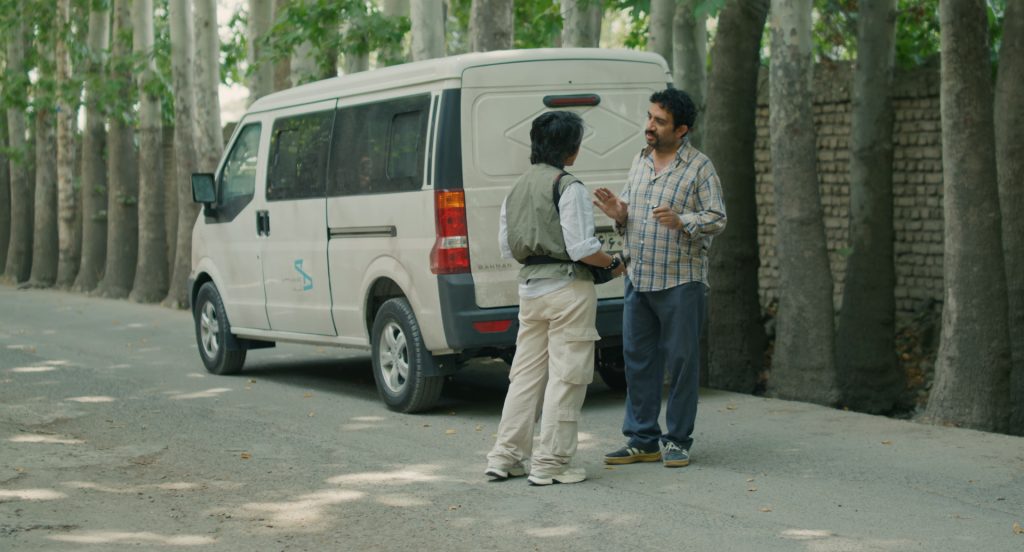
If there’s any equivalent to the fantastic transition between two worlds in The Wizard of Oz, it occurs in the cut where Vahid, after following his enemy home the first night on a motorcycle, resumes his surveillance the next morning from the borrowed white van. There’s no literal magic in the cut because we understand what’s happened, yet the sudden shift in time and the upgraded vehicle create a surprising discontinuity. Apart from the accidental encounter between torturer and victim the first night, and the ambiguous sound of Eghbal’s footsteps on the final day, everything that’s dramatic occurs in the intervening 24-hour period.
As in Kansas and Oz, there are parallels between Vahid’s undramatic everyday life and the adventure and characters of the main day. His sister is on the eve of getting married, just like the bride and groom who come with Shiva. Vahid’s right kidney ails him, and his enemy “Eghbal” (his real name is Rashid Shahsavari) is missing his right leg. Vahid works in the hilly outskirts of Tehran, and Eghbal lives in a similar area. The ordinary toolbox in Vahid’s workshop has an analogue in the coffin-sized toolbox where he keeps Eghbal locked up. The logo for Vahid’s workplace is duplicated in Hamid’s posture at the beginning of the second desert scene. The dog that ran in front of Eghbal’s car (near Vahid’s workshop) is echoed in two dogs that get in the way of the van. Maybe strangest of all is the Eghbal Hospital sharing its name with the father of the baby born there, a coincidence that almost calls into question the reality of the situation, as if the whole day were Vahid’s dream. There’s no need to go that far, but the ending leaves us with something more important – and in that sense more real – than the chain of fictional events that leads to it.
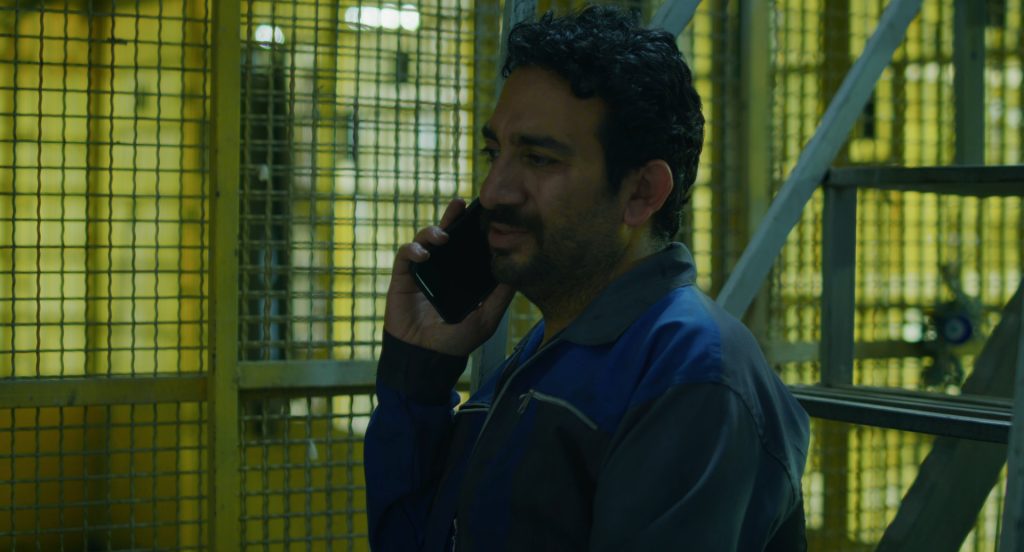
All the similarities to The Wizard of Oz offset the one great difference. Instead of finding any wizard or witch on his adventure, Vahid finds a man whose counterpart in ordinary life is himself. Vahid says that Eghbal’s squeaky leg has been resonating in his ears ever since his imprisonment, so that the trademark sound actually belongs to both men. Salar warns Vahid that punishing Eghbal will make him just like his captor. Toward the end Vahid tells Eghbal, “You turned me into a bastard like you!” and ten minutes later, when he breaks down, Eghbal says, “I swear I’m just like you.” Vahid never completes his revenge, but Eghbal did not kill his victims either… in fact, from what we hear of the ordeals in prison and from what we see onscreen, each side torments the other in a similar fashion with blindfolds, beatings, stripping, confinement, and threats of execution. In effect, Salar’s warning proves accurate – both men are alike in the end.
Most reviewers of the film are compelled to note the powerful effect of its ending when Vahid hears Eghbal’s distinctive footsteps behind him. Vahid tenses up in front of a staircase and doesn’t turn around, but he can hear the steps approach, pause, then move on. In the previous scene Vahid had freed his enemy in an act of great mercy, and he had also helped the man’s family, paying for the delivery of his newborn son in a hospital. While tied to a tree, Eghbal too had exposed his humanity, confessing that his worst actions were driven by a fear of humiliation. When Eghbal walks away at the end, presumably leaving Vahid in peace, we have every reason to suppose that he’s making a reciprocal gesture of mercy.
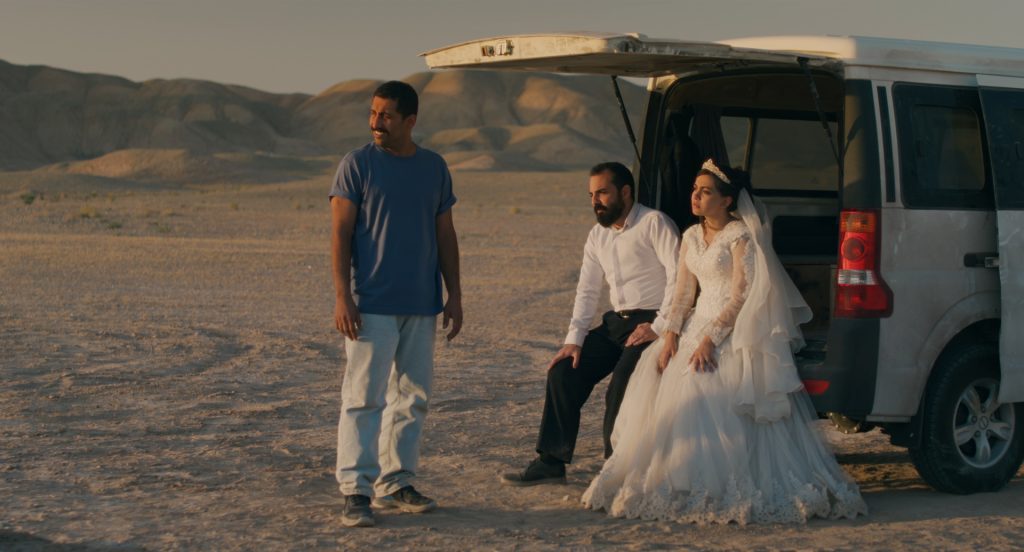
All the same, we don’t need to write off the ambiguity of this ending. Vahid and his friends had terrorized Eghbal to such an extent that it would be plausible for such a man to perpetuate the cycle of revenge. It’s not certain that Eghbal sees Vahid, or that he even leaves at all. It could just as well be that he’s come to repay the hospital bill, but the film doesn’t need to go beyond the open ending. What’s important is not what happens next, but what Vahid might come to understand at this point. The ambiguity in the situation reflects the duality in each man’s character – just as the footsteps can be read as menacing or merciful, those two qualities exist side by side in each man.
In this regard, the film again echoes The Wizard of Oz, where Dorothy’s friends simultaneously embody key virtues as well as their lack. In his bookstore Salar personifies good thinking, but Shiva later says he made a “grave mistake” sending Vahid to her. Shiva works in a world of romance, but her ex-partner Hamid upbraids her for casting him off in a time of difficulty. Hamid is abundantly courageous, and his thirst for revenge is more fanatical than anyone else’s, yet he’s the first to walk away from the shared quest. Likewise, Vahid and Eghbal both exhibit a duality in their personalities, a potential for both menace and mercy, that summarizes the dualities in everyone else. The film is not drawing a moral equivalence between victim and oppressor; rather it’s looking for a shared humanity while acknowledging that this humanity will be imperfect.
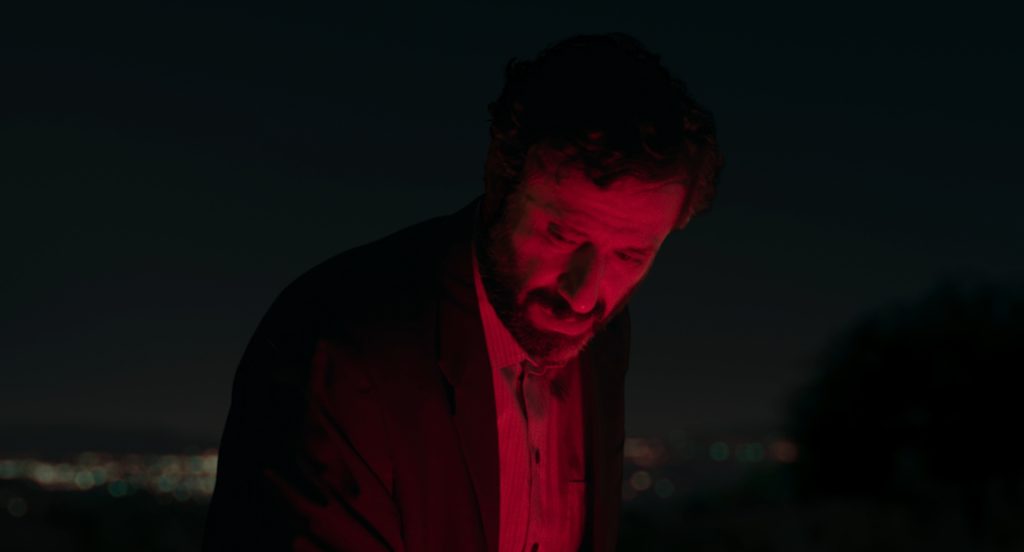
Eghbal’s pointed chin, beard, and artificial leg give him a vague resemblance to traditional depictions of Satan with his single cloven hoof, and the early shot of him bathed in the red light of his taillights complements this impression. Vahid’s ailment, on the other hand, gives him the periodic appearance of a one-winged angel. Hamid, too, looks like a broken angel when he stands in the desert with arms bent asymmetrically, and Shiva calls herself “the angel of death”. To anyone seeking revenge, or to any ideologically committed government agent, the difference between oneself and the enemy must appear to be a difference of good and evil, but a closer understanding of the other person necessarily erodes this fictional distinction. By the end of that momentous day, Shiva and Vahid are bathed in red light along with their prey.
It’s easy to assert that all humans are capable of both cruelty and mercy, but hearing it is nowhere near the same as feeling it. A film like It Was Just an Accident can hope to give viewers some of the weight of experience, thus inoculating them against the binary thinking that obscures the humanity we share with our enemies, but the film also acknowledges that this understanding comes from hard experience. In any case it does not come free of charge, and on this point, in what can almost be described as a running joke, the characters find themselves paying as they go. Five times they’re charged unexpectedly, like travelers forced to pay tolls on a road. In order to advance smoothly they must tip a band of street musicians, a pair of security guards, a gas station attendant, and a hospital nurse, in addition to Vahid covering the bill for the baby’s delivery. Hamid never contributes, and he appears to learn nothing from the experience, whereas Vahid, who finally releases Eghbal, appears to learn the most.
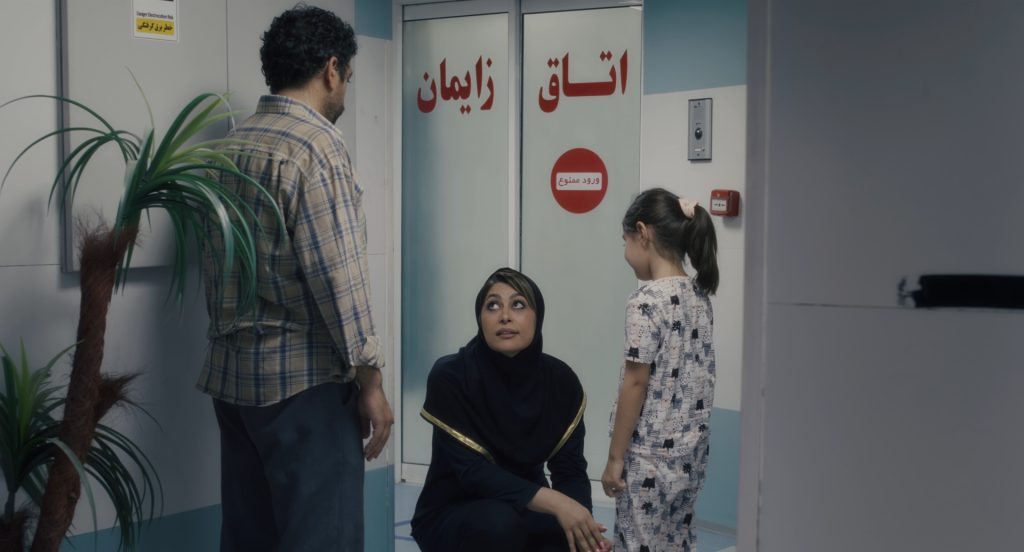
It may not be just an accident that the variety of these tolls corresponds to what audiences normally hope to get from a movie. The characters symbolically pay for entertainment (music), comfort (security), inspiration (fuel), and well-being (the nurse). By the same token, it’s not enough for a viewer to absorb the experience offered in It Was Just an Accident passively. To get the movie’s full benefit, it’s also necessary to give something – not in front of the screen, but in the real world where it’s so important for mercy to win out.
CONNECTIONS:
The Wizard of Oz – Series of troubles starts with a dog; protagonist finds partners connected with mind, heart, and courage in that order; adventurers run out of fuel midway through; innocent girl with red shoes
Shadow of a Doubt – Man freezes on or in front of a stairway when he realizes someone is observing him behind his back
Winter Light – Character whose physical ailment gives the vague appearance of an angel’s wing
Veronika Voss – Multiple allusions, of varying overtness, to angels