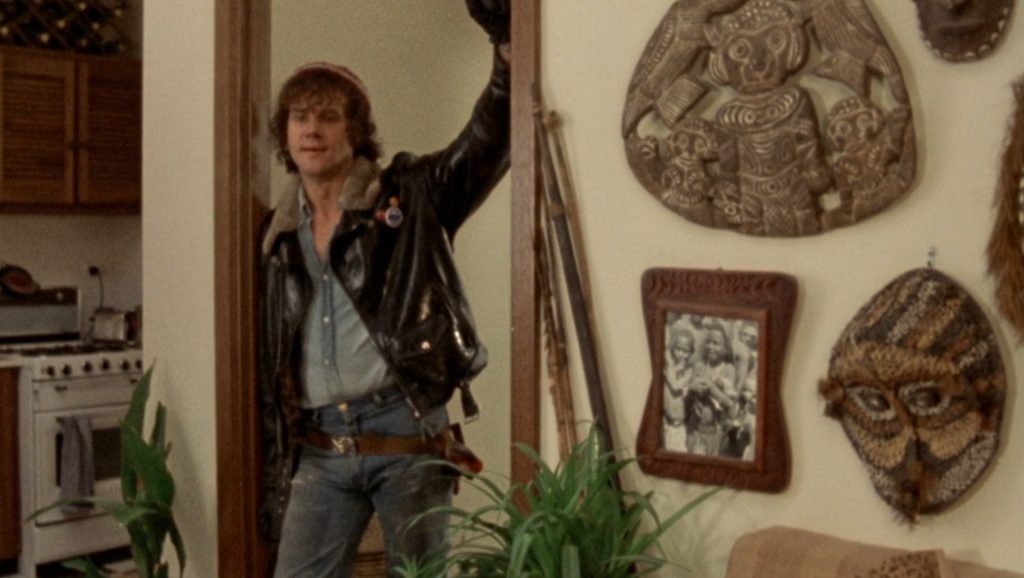
The Plumber
1979, directed by Peter Weir
In his short story The Garden of Forking Paths, Jorge Luis Borges poses the question: “In a riddle whose answer is chess, what is the only prohibited word?” The question is a paradox, because it itself is a riddle whose answer is chess, but in any case it points to a fundamental law of cinema – a good movie must not declare its point too openly. The Plumber is a kind of riddle, because its chief subject, although mentioned once in an offhand way, is otherwise hidden in plain sight. It’s a film about racism, but it only works because its correlative for racial conflict is played out between two white characters. If the plumber had been black, it’s not only that the film would have been too on-the-nose; it’s that viewers would take the story for granted as showing the kind of failed social interaction that they expect between different races. Instead, by focusing on the dynamics of that failure, the film reveals specific insights into the roots of racism.
Before the plumber ever walks in the door, Jill Cowper tells her husband Brian about a strange encounter she had while doing anthropological research in the New Guinea highlands. A native sorcerer had come into her tent at night, singing and shouting. He stayed until dawn, working himself up into a frenzy. Jill remained still yet frightened, until finally she felt she “had to do something” and threw a bowl of goat’s milk in the man’s face, whereupon her visitor “cried just like a child.” This story encapsulates what will transpire over the remainder of the film between her and Max.
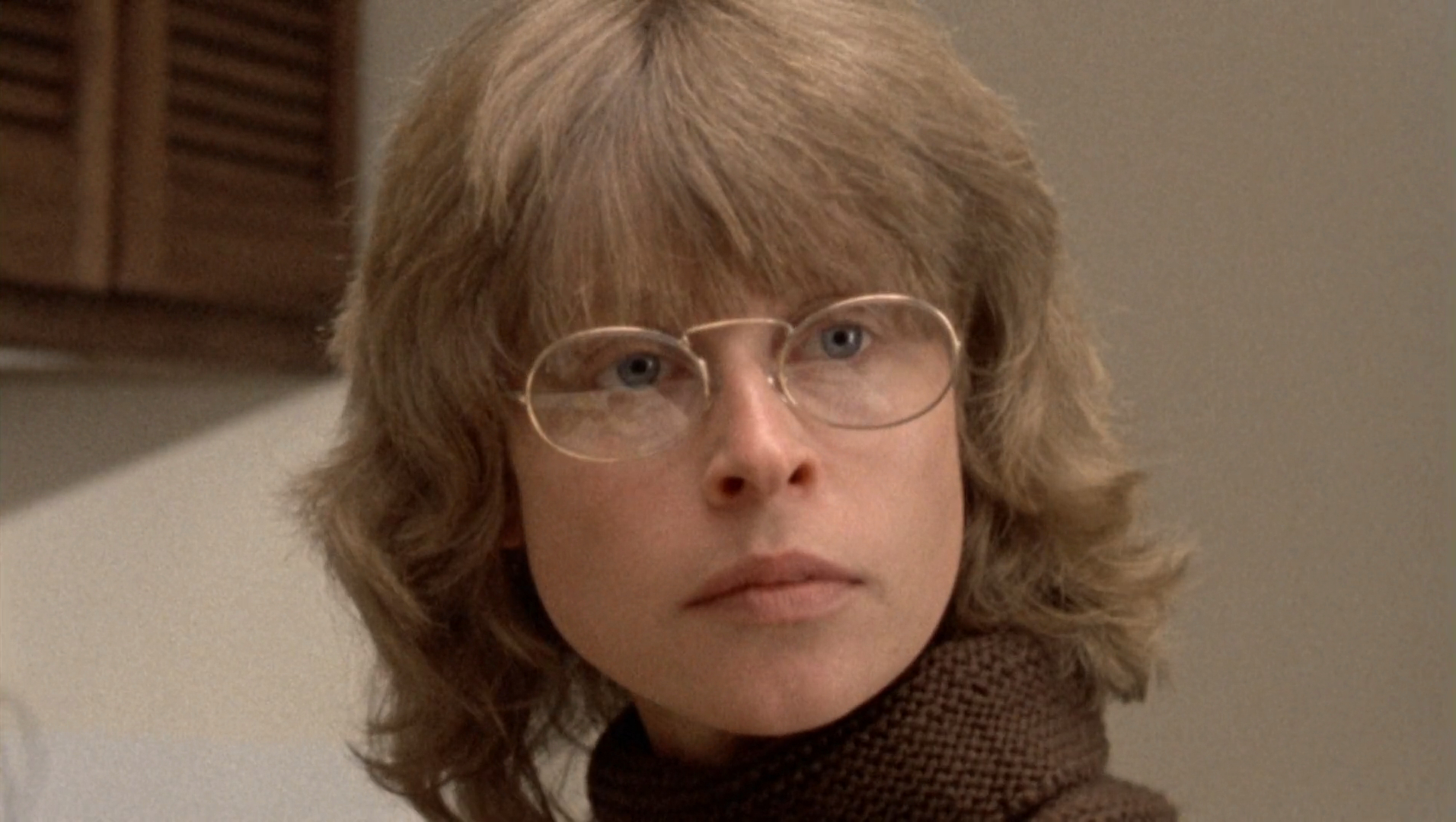
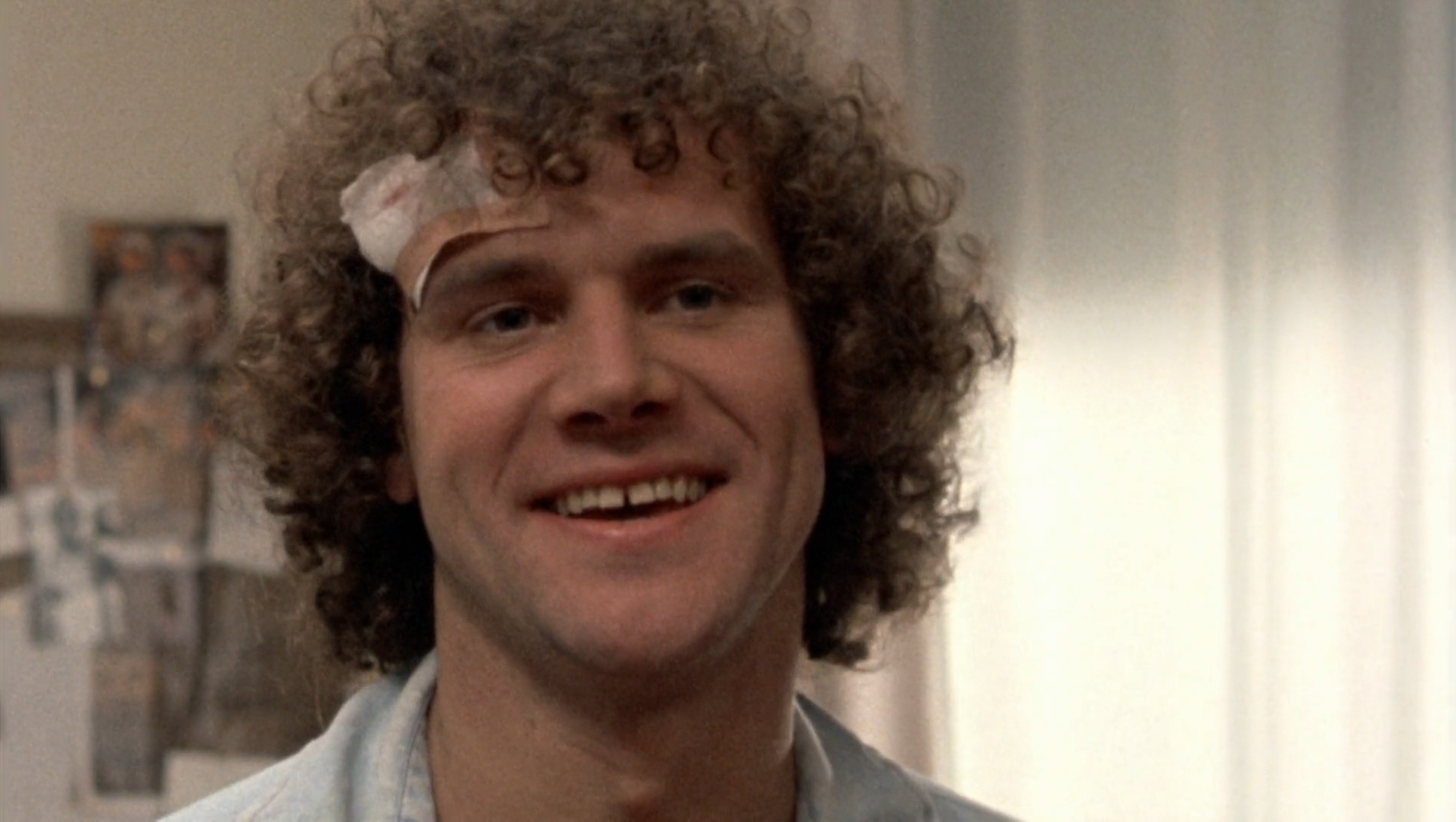
Max is first introduced less than a minute after Jill’s story, getting on the elevator of the university housing block where the Cowpers live, just when Brian leaves the building. In the preceding shot Brian had boarded the elevator with four of his neighbors, including a black man who motions for him to go ahead. The film cuts from this gracious black man to Max’s hips moving at the same speed in the same direction. The plumber wears tattered jeans, a leather jacket, and black gloves, and he moves with the relaxed swagger of a working class man. His hand pauses before punching the button for Jill’s floor; he leans casually against the elevator wall; the door closes; and before we see his face or upper body, the film cuts to Jill leafing through pictures of Papuan tribesmen. Finally Max knocks on Jill’s door, startling her.
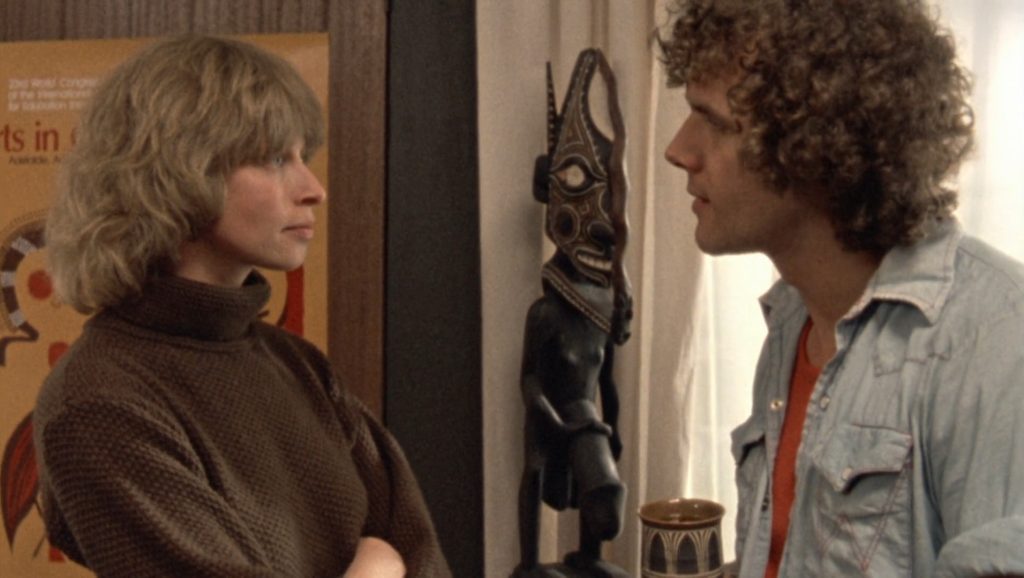
Three times already, the film’s sequencing has paired Max with black men: in Jill’s story and in the two cuts bracketing his entry onto the elevator. Again, at the end of Max’s first visit, the film will cut to footage of a kuru-infected tribesman with a smile resembling his. Max marvels at all the masks, photographs, posters, and statues in the Cowpers’ apartment. He is friendly and reassuring, but his self-assurance can seem menacing. His unannounced visit begins to unnerve Jill, and the story becomes a case study in ambiguity as Jill is kept wondering about Max’s intentions. His uninhibited behavior, his extended stay, Jill’s recurring fears, and her final lashing out will all echo her experience in the tent in New Guinea.
Despite their stark differences in class and demeanor, both Jill and Max are recognizable types of white liberals. She’s writing a master’s thesis in cultural studies; he’s a vegetarian folk singer opposed to capitalist exploitation. He wears a peace logo, a “Save the Whale” button, and a “Liberal = Less Tax” sticker. The parallels between them run deep enough that they’ll both give voice to the same line… in her yoga class, and in his spontaneously composed song, each will utter the comically solipsistic words “I’m me.” Likewise, they’re both from Melbourne, and she listens to yodeling tribesmen while he hoots outside her window or in the shower. He jokes about having been in prison, and her building is jokingly called “the cell block”. These symmetries point to a shared humanity that he seems to appreciate but she never does. He speaks admiringly of her, and he’s anxious to reciprocate the kindnesses he’s coaxed out of her, bringing homemade cakes and tea to repay her coffee and sandwich.
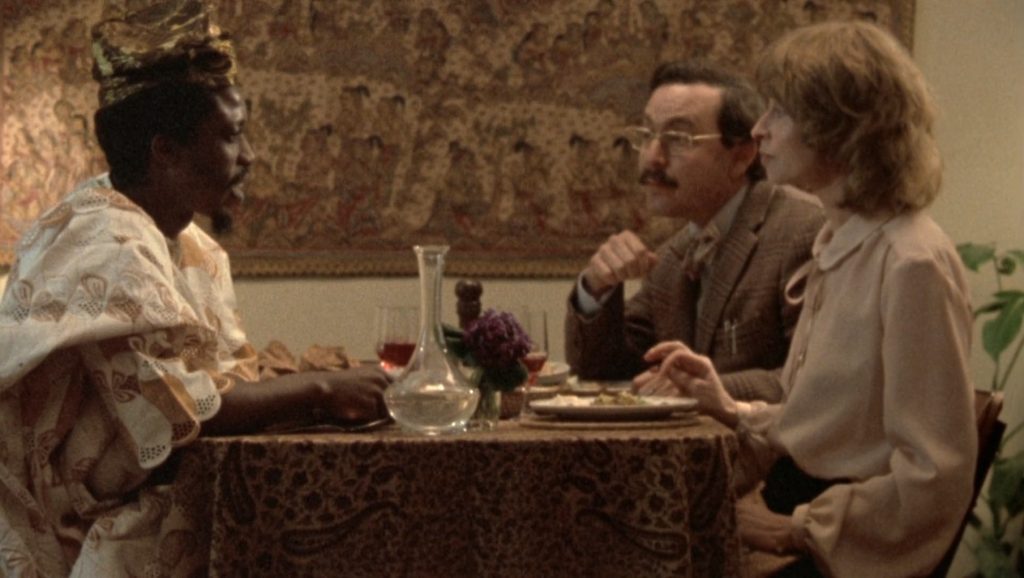
The only mention of race (the “prohibited word” in this riddle) is when Max describes the class discrimination he gets as a tradesman: “Talk about discrimination against the blacks….” There’s also a hint of prejudgment when Jill is left alone with two doctors from the World Health Organization at dinner. The Swiss doctor whom she asks about skiing doesn’t ski, but the African doctor tells her that he skis in Colorado. The main correlative to racism, though, is the injustice at the end when Jill frames the plumber, planting her expensive watch in his car to get him arrested. At that point, despite all of Max’s boldness and inappropriate behavior, he’s been absolved of any grave wrongdoing. He’s told Brian of his respect for Jill, he’s taken her fears and insults gracefully, and he’s wrapped up the job once already without harming Jill.
The plot of The Plumber is a series of ambiguous situations and interactions, often misunderstood to everyone’s disadvantage. When Max first arrives he blames the management for not calling ahead, and Jill doubtless reproaches herself for letting him in. When he startles her in the bathroom it looks certain that he’s up to no good, but he’s merely bringing in a delivery. When he comes in through the roof it looks even worse, but we’ve seen that she didn’t hear him at the front door. His excuses are bad, but his intentions are apparently decent. At one point he tells her, “I’m not really a plumber, you know,” as if momentarily confirming her worst fears before he clarifies himself: “I’m actually a folk singer.” Only after Jill plants the watch in Max’s car does Brian confirm that the plumbing work really needed to be done: “By the way, I called admin. They said the same thing’s happening in a number of units.”
As terrible as Jill’s betrayal of Max at the end is, we can believe she’s driven more by fear and misunderstanding than by any innate hatred. The film opens with an homage to the famous shower scene in Psycho, portending a tale of horror, and it holds the viewer in suspense as Max alternates between affability and transgression. At one point the balance nearly unravels as Max jokes that he’s been in prison for rape. He says it in a quiet but threatening way that viewers may never be ready to forgive, even if she was wrong to probe his past the way she does: “Were you in prison?” “Yeh.” “What for?” He later denies having been incarcerated, and it’s plausible that his joke was meant to reciprocate her offense. No one, however, is asking us to forgive him… we only need to understand that she acts wrongly when she plants the watch. The ending resembles the miscarriage of justice that characterizes a racist system, where the minority is so often left powerless and ruined.
Misunderstandings permeate all the major relationships, even beyond Jill and Max. Brian is so wrapped up in his career, hoping to get a two-year stint in Geneva, that he fails to appreciate the gravity of Jill’s fears. Jill’s friend Meg is so turned on by Max’s charm and masculinity that she too is blind to any potential threat. Brian’s colleagues are similarly unconvinced that his evidence for a resurgence of kuru should be taken seriously. Nevertheless, all those relationships survive, while the sole analog to a racially opposite relationship goes horribly wrong.
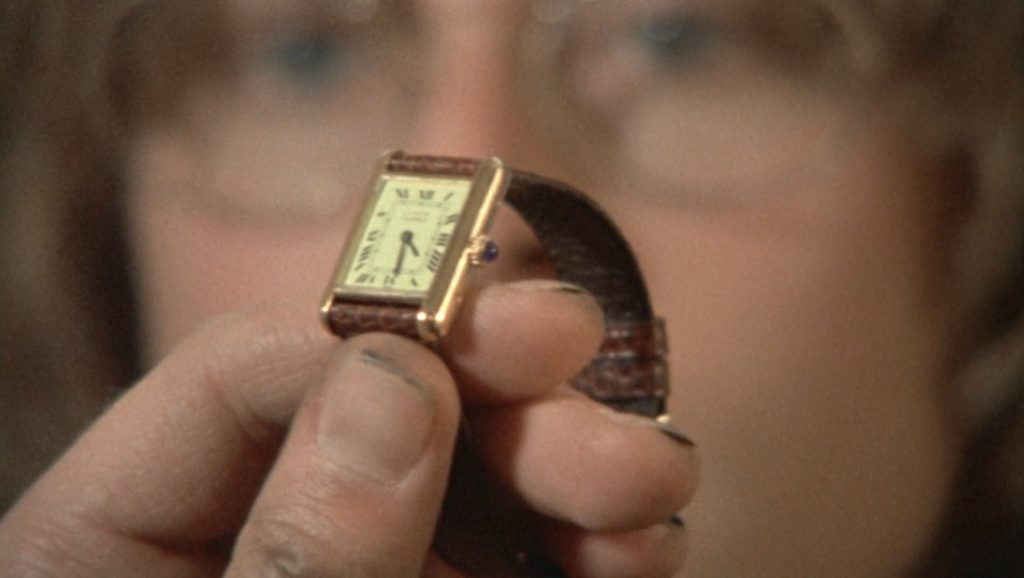
When Jill tells Brian how she ended the encounter with the sorcerer, he says, “That’s bloody good!” From the perspective of a fearful white person, unsure of the tribesman’s intentions, throwing milk in his face might sound like an act of courage, but Jill’s equivalent act at the end of The Plumber exposes the cowardice of her earlier gesture in New Guinea. She slips the watch in her bag and walks toward Max’s station wagon with cold calculation, and when the deed is done she dresses up, slices an avocado, clinks champagne glasses with Brian, and lies to her husband, telling him the watch simply disappeared. Her actions and her new look have the earmarks of privilege, as if she knows society will take her side, and the next morning Max is caught with the watch in the car park. The worst thing about her betrayal is that she initiates it right after Max says, “We’re just gonna have to learn to get along with each other. Aren’t we?” She’s recently lashed out several times, trying to close an elevator door on him and calling him a “dumb thief” and a “dirty filthy tradesman”, yet now he offers to reset the relationship. This wasted opportunity should be an emotional spur to the audience, preventing viewers from making similar mistakes.
CONNECTIONS:
Chase a Crooked Shadow – Deeply ambiguous story of a male intruder in a woman’s home
Psycho – Shower montage at an important point of the film
The Passenger – Past encounter with a tribal magician points to a reversal of assumptions
Caché – Wasted opportunity to reset a relationship of fear and recrimination
Get Out – Analysis of racism in liberal white culture, wrapped in the cloak of a horror film